Buy smartaging.eu ?
We are moving the project
smartaging.eu .
Are you interested in purchasing the domain
smartaging.eu ?
domain@kv-gmbh.de · 0541-91531010
Buy smartaging.eu ?
Why don't we sing the N-word?
The N-word is a racial slur with a deeply hurtful and oppressive history. It has been used to dehumanize and oppress Black people for centuries, and its use perpetuates a legacy of racism and discrimination. Singing the N-word, even in the context of a song, can be deeply offensive and hurtful to those who have been affected by its use. It is important to respect the pain and trauma associated with this word and to work towards creating a more inclusive and respectful society by not using it in any context. **
During Lent, we sing.
During Lent, many Christian traditions incorporate special music into their worship services. This music often reflects the somber and reflective nature of the Lenten season, with hymns and songs that focus on themes of repentance, sacrifice, and the journey towards Easter. Singing during Lent can be a powerful way for individuals and communities to express their faith, seek spiritual renewal, and connect with the deeper meaning of the season. The act of singing together can also create a sense of unity and shared purpose among worshippers as they journey through Lent towards the celebration of Easter. **


Similar search terms for Why-We-Sing-The
Top-Angebote
Products related to Why-We-Sing-The:
-
Your Brain on Art Susan Magsamen, Why We Sing Julia Hollander 2 Books SetDescription. Condition: BRAND NEW. Format: Paperback. Why We Sing. As a singing therapist, teacher and performer, Julia Hollander is in a unique position to consider singing's importance to our wellbeing, charting its extraordinary influence on all aspects of our spiritual, emotional and physical lives.Why do parents feel compelled to sing to their newborns, and how does it help their development? What is it about song that brings communities together in harmony but also in protest? How come an activity that helps to embed languages and maths formulae can also be used to rehabilitate Long Covid sufferers? And what magic is at work when people who have lost the power to speak are still able to sing..... Your Brain on Art: How the Arts Transform Us .... We're on the verge of a cultural shift in which the arts can deliver potent, accessible and proven solutions for the well-being of everyone. Magsamen and Ross offer compelling research that shows how engaging in an art project - from painting and dancing to expressive writing, architecture and more - for as little as forty-five minutes reduces the stress hormone cortisol, no matter your skill level, and just one art experience per month can extend your life by ten years.Your Brain on Art is an authoritative guide to how neuroaesthetics can help us transform traditional medicine, build healthier communities and mend an aching planet. The book weaves a tapestry of breakthrough research, insights from multidisciplinary pioneers and compelling stories from people who are using the arts to enhance their lives..... Title. Your Brain on Art Susan Magsamen, Why We Sing Julia Hollander 2 Books Set. Delivery. Content. Reviews19,99 £*Shipping: 2,99 £Secure redirect to the provider
-
Julia Hollander & Bonnie Garmus Lessons In Chemistry & Why We Sing 2 Books Collection Set - Fiction - PaperbackTitles in This Set:. Why We Sing. Lessons in Chemistry Condition: BRAND NEW. Format: Paperback Overview:. Two powerful voices converge in this carefully chosen two-book collection. Why We Sing invites readers into a world where song is medicine for the body and a catalyst for connection, seen through the lens of a practicing singing therapist, teacher, and performer. Julia Hollander explores why singing to newborns supports development, how melodies bind communities in solidarity and protest, and how music can aid rehabilitation for those facing Long Covid—or the challenge of finding words when speech falters. Paired with Lessons in Chemistry, Bonnie Garmus’s breakout novel, the set balances scientific curiosity with human resilience. Elizabeth Zott’s determination in the early 1960s—navigating a male-dominated field, reinventing a cooking show as a science-infused platform, and challenging gender norms—offers a gripping counterpoint to Hollander’s reflective exploration of voice and wellbeing. This paperback duo is ideal for curious readers who love thoughtful nonfiction braided with compelling fiction, crafted for easy reading aloud, thoughtful reflection, and meaningful conversation. A memorable gift for students, parents, teachers, and book lovers seeking both intellect and heart in one sitting. What Makes This Collection Special:. This collection stands out because it pairs two distinct storytelling modes around a shared obsession with curiosity, learning, and human spirit. Hollander’s accessible, evidence-informed meditation on the act of singing complements Garmus’s razor-sharp, character-driven meditation on science, courage, and societal change. Readers get a dual experience: a practical lens on voice, health, and community, plus a richly plotted novel about one woman’s fight to use science as a force for good—and for truth. The set invites binge-reading sessions that feel cohesive yet satisfying in their difference, making it a standout option for gifting, group reads, and personal libraries. It’s a thoughtful blend for those who crave uplifting science-informed literature with memorable characters and timely themes. Books Included in This Collection:. Why We Sing. Why We Sing examines the science and meaning of singing in everyday life—how a simple chorus can lift mood, support language development, and create social bonds. Hollander’s perspective as a singing therapist and performer offers practical insights alongside evocative storytelling about people who find voice, even when words fail. Expect accessible explanations of how singing shapes the brain, fosters resilience, and builds community, all delivered in a warm, engaging voice. This book is the perfect entry point for readers curious about the physiology of song and the emotional power of collective sound. Lessons in Chemistry. In this acclaimed novel, Elizabeth Zott’s brilliance as a chemist collides with the era’s expectations—and with a culture resistant to women leading the...21,99 £*Shipping: 2,99 £Secure redirect to the provider
-
HARPERCOLLINS Lifespan: Why We Age and Why We Dont Have ToLifespan - Why We Age and Why We Dont Have To Description In this paradigm-shifting book from acclaimed Harvard Medical School doctor and one of TIME magazine's 100 most influential people on earth; Dr. David Sinclair reveals that everything we think we know about ageing is wrong; and shares the surprising; scientifically-proven methods that can help readers live younger; longer. For decades; the medical community has looked to a variety of reasons for why we age; and the consensus is that no one dies of old age; they die of age-related diseases. That's because ageing is not a disease - it is inevitable. But what if everything you think you know about ageing is wrong?What if ageing is a disease? And that disease is curable. In LIFESPAN; Dr. David Sinclair; one of the world's foremost authorities on genetics and ageing; argues just that. He has dedicated his life's work to chasing more than a longer lifespan - he wants to enable people to live longer; healthier; and disease-free well into our hundreds. In this book; he reveals a bold new theory of ageing; one that pinpoints a root cause of ageing that lies in an ancient genetic survival circuit. This genetic trick - a circuit designed to halt reproduction in order to repair damage to the genome -has enabled earth's early microcosms to survive and evolve into more advanced organisms. But this same survival circuit is the reason we age: as genetic damage accumulates over our lifespans from UV rays; environmental toxins; and unhealthy diets; our genome is overwhelmed; causing gray hair; wrinkles; achy joints; heart issues; dementia; and; ultimately; death. But genes aren't our destiny; we have more control over them than we've been taught to believe. We can't change our DNA; but we can harness the power of the epigenome to realise the true potential of our genes. Drawing on his cutting-edge findings at the forefront of medical research; Dr. Sinclair will provide a scientifically-proven roadmap to reverse the genetic clock by activating our vitality genes; so we can live younger longer. Readers will discover how a few simple lifestyle changes - like intermittent fasting; avoiding too much animal protein; limiting sugar; avoiding x-rays; exercising with the right intensity; and even trying cold therapy - can activate our vitality genes. Dr. Sinclair ends the book with a look to the near future; exploring what the world might look like - and what will need to change - when we are all living well to 120 or more. Dr. Sinclair takes what we have long accepted as the limits of human potential and mortality and turns them into choices. THE EVOLUTION OF AGEING is destined to be the biggest book on genes; biology; and longevity of this decade.7,95 £*Shipping: 2,99 £Secure redirect to the provider
-
Why We Get the Wrong Politicians by Isabel HardmanDescription. Politicians are consistently voted the least trusted professional group by the UK public. They've recently become embroiled in scandals relating to everything from expenses to sexual harassment to illicit parties. Every year, they introduce new legislation that doesn't do what it sets out to achieve - often with terrible financial and human costs. But, with some notable exceptions, they are decent, hard-working people, doing a hugely difficult and demanding job.. Title. Why We Get the Wrong Politicians. Delivery. Content. Reviews99,99 £*Shipping: 0,00 £Secure redirect to the provider


-
Why do we get goosebumps when we hear someone sing really well?
We get goosebumps when we hear someone sing really well because of the intense emotional response it triggers in our bodies. When we hear a powerful and moving performance, it can evoke strong emotions such as joy, awe, or nostalgia, which can cause our body to release adrenaline. This adrenaline can cause the tiny muscles at the base of our hair follicles to contract, resulting in the appearance of goosebumps. It's a physical reaction to the emotional impact of the music. **
-
Why do we sing "Guten Morgen, Herr" in school?
We sing "Guten Morgen, Herr" in school as a way to greet our teacher and classmates in a friendly and respectful manner. It helps create a positive and welcoming atmosphere at the beginning of the school day. Additionally, singing can be a fun and engaging way to start the day and can help students feel more connected to each other and their teacher. **
-
Why do cats go crazy when we humans sing?
Cats may go crazy when humans sing because they are sensitive to high-pitched sounds, and singing often involves high-pitched tones. Additionally, cats may interpret singing as a form of communication or a territorial display, which can trigger their natural instincts. Some cats may also be reacting to the unfamiliar sound and trying to investigate or understand it. Overall, the specific reasons why cats react to human singing can vary from cat to cat, but it is likely a combination of their sensitivity to sound and their natural instincts. **
-
In the 10th grade, we sing music.
In the 10th grade, students typically participate in music classes where they learn to sing various genres of music. Singing in a group setting helps students develop their vocal skills, musicality, and teamwork. It also provides an opportunity for students to express themselves creatively and build confidence. Overall, singing music in the 10th grade can be a fun and enriching experience that enhances students' appreciation for music. **

Why do we sing in the song Oh Christmas Tree, how beautiful are your branches?
In the song "Oh Christmas Tree," we sing about the beauty of the tree's branches as a way to celebrate and appreciate the natural beauty of the Christmas tree. The song highlights the tree's role as a symbol of the holiday season and the joy it brings to people. By singing about the tree's beauty, we are expressing our admiration for this iconic symbol of Christmas and the festive spirit it represents. **
Why do blackbirds sing?
Blackbirds sing for a variety of reasons. One main reason is to establish and defend their territory. Male blackbirds will sing to let other males know that a particular area is already claimed. They also sing to attract a mate during the breeding season. Additionally, blackbirds may sing to communicate with other members of their flock, to warn of potential predators, or simply to express their emotions. Overall, singing is an important form of communication and social interaction for blackbirds. **
Top-Angebote
Products related to Why-We-Sing-The:
-
Why We Sing: The Importance of Singing for Our Health and Wellbeing by Julia HollanderAs a singing therapist, teacher and performer, Julia Hollander is in a unique position to consider singing's importance to our wellbeing, charting its extraordinary influence on all aspects of our spiritual, emotional and physical lives.. Why do parents feel compelled to sing to their newborns, and how does it help their development? What is it about song that brings communities together in harmony but also in protest? How come an activity that helps to embed languages and maths formulae can also be used to rehabilitate Long Covid sufferers? And what magic is at work when people who have lost the power to speak are still able to sing?. By delving into her own life experiences, and calling on those of her fellow singers, the author seeks to answer these questions, underpinning her findings with the latest scientific research.. In so many walks of life, people of all ages and backgrounds are waking up to the joys of singing, its power to give hope and connection in a fragmented world. Song-making is available in an increasingly broad range of social and therapeutic contexts, prescribed by doctors and community services. This book offers explanations for why this should be, and inspiration to anyone who loves to sing.99,99 £*Shipping: 0,00 £Secure redirect to the provider
-
Why We Sing: A Celebration of Song by Julia HollanderDescription. Title:. Why We Sing: A Celebration of Song by Julia Hollander. Condition:BRAND NEW. Format:Paperback. ISBN:9781838953652. Singing has always been there for us, at the root of what it is to be a human being. Through personal anecdote and scientific fact-finding, this book celebrates the way song inspires and heals us, from the cradle to the grave, and in the process does for singing what The Well-Gardened Mind did for nature, and what Why We Eat did for our diets.. As a singing therapist, teacher and performer, Julia Hollander is in a unique position to consider singing's importance to our wellbeing, charting its extraordinary influence on all aspects of our spiritual, emotional and physical lives.. Why do parents feel compelled to sing to their newborns, and how does it help their development? What is it about song that brings communities together in harmony but also in protest? How come an activity that helps to embed languages and maths formulae can also be used to rehabilitate Long Covid sufferers? And what magic is at work when people who have lost the power to speak are still able to sing?. By delving into her own life experiences, and calling on those of her fellow singers, the author seeks to answer these questions, underpinning her findings with the latest scientific research.. About the Author:. Julia Hollander is a British theatre director, teacher and writer. She has staged operas all over the world, including three acclaimed productions for English National Opera in London. Her study and artistic collaboration with Indian folk theatre practitioners began in the early 1990's.. Title. Why We Sing: A Celebration of Song by Julia Hollander. Delivery. Content. Reviews8,99 £*Shipping: 2,99 £Secure redirect to the provider
-
Your Brain on Art Susan Magsamen, Why We Sing Julia Hollander 2 Books SetDescription. Condition: BRAND NEW. Format: Paperback. Why We Sing. As a singing therapist, teacher and performer, Julia Hollander is in a unique position to consider singing's importance to our wellbeing, charting its extraordinary influence on all aspects of our spiritual, emotional and physical lives.Why do parents feel compelled to sing to their newborns, and how does it help their development? What is it about song that brings communities together in harmony but also in protest? How come an activity that helps to embed languages and maths formulae can also be used to rehabilitate Long Covid sufferers? And what magic is at work when people who have lost the power to speak are still able to sing..... Your Brain on Art: How the Arts Transform Us .... We're on the verge of a cultural shift in which the arts can deliver potent, accessible and proven solutions for the well-being of everyone. Magsamen and Ross offer compelling research that shows how engaging in an art project - from painting and dancing to expressive writing, architecture and more - for as little as forty-five minutes reduces the stress hormone cortisol, no matter your skill level, and just one art experience per month can extend your life by ten years.Your Brain on Art is an authoritative guide to how neuroaesthetics can help us transform traditional medicine, build healthier communities and mend an aching planet. The book weaves a tapestry of breakthrough research, insights from multidisciplinary pioneers and compelling stories from people who are using the arts to enhance their lives..... Title. Your Brain on Art Susan Magsamen, Why We Sing Julia Hollander 2 Books Set. Delivery. Content. Reviews19,99 £*Shipping: 2,99 £Secure redirect to the provider
-
Julia Hollander & Bonnie Garmus Lessons In Chemistry & Why We Sing 2 Books Collection Set - Fiction - PaperbackTitles in This Set:. Why We Sing. Lessons in Chemistry Condition: BRAND NEW. Format: Paperback Overview:. Two powerful voices converge in this carefully chosen two-book collection. Why We Sing invites readers into a world where song is medicine for the body and a catalyst for connection, seen through the lens of a practicing singing therapist, teacher, and performer. Julia Hollander explores why singing to newborns supports development, how melodies bind communities in solidarity and protest, and how music can aid rehabilitation for those facing Long Covid—or the challenge of finding words when speech falters. Paired with Lessons in Chemistry, Bonnie Garmus’s breakout novel, the set balances scientific curiosity with human resilience. Elizabeth Zott’s determination in the early 1960s—navigating a male-dominated field, reinventing a cooking show as a science-infused platform, and challenging gender norms—offers a gripping counterpoint to Hollander’s reflective exploration of voice and wellbeing. This paperback duo is ideal for curious readers who love thoughtful nonfiction braided with compelling fiction, crafted for easy reading aloud, thoughtful reflection, and meaningful conversation. A memorable gift for students, parents, teachers, and book lovers seeking both intellect and heart in one sitting. What Makes This Collection Special:. This collection stands out because it pairs two distinct storytelling modes around a shared obsession with curiosity, learning, and human spirit. Hollander’s accessible, evidence-informed meditation on the act of singing complements Garmus’s razor-sharp, character-driven meditation on science, courage, and societal change. Readers get a dual experience: a practical lens on voice, health, and community, plus a richly plotted novel about one woman’s fight to use science as a force for good—and for truth. The set invites binge-reading sessions that feel cohesive yet satisfying in their difference, making it a standout option for gifting, group reads, and personal libraries. It’s a thoughtful blend for those who crave uplifting science-informed literature with memorable characters and timely themes. Books Included in This Collection:. Why We Sing. Why We Sing examines the science and meaning of singing in everyday life—how a simple chorus can lift mood, support language development, and create social bonds. Hollander’s perspective as a singing therapist and performer offers practical insights alongside evocative storytelling about people who find voice, even when words fail. Expect accessible explanations of how singing shapes the brain, fosters resilience, and builds community, all delivered in a warm, engaging voice. This book is the perfect entry point for readers curious about the physiology of song and the emotional power of collective sound. Lessons in Chemistry. In this acclaimed novel, Elizabeth Zott’s brilliance as a chemist collides with the era’s expectations—and with a culture resistant to women leading the...21,99 £*Shipping: 2,99 £Secure redirect to the provider
-
Why don't we sing the N-word?
The N-word is a racial slur with a deeply hurtful and oppressive history. It has been used to dehumanize and oppress Black people for centuries, and its use perpetuates a legacy of racism and discrimination. Singing the N-word, even in the context of a song, can be deeply offensive and hurtful to those who have been affected by its use. It is important to respect the pain and trauma associated with this word and to work towards creating a more inclusive and respectful society by not using it in any context. **
-
During Lent, we sing.
During Lent, many Christian traditions incorporate special music into their worship services. This music often reflects the somber and reflective nature of the Lenten season, with hymns and songs that focus on themes of repentance, sacrifice, and the journey towards Easter. Singing during Lent can be a powerful way for individuals and communities to express their faith, seek spiritual renewal, and connect with the deeper meaning of the season. The act of singing together can also create a sense of unity and shared purpose among worshippers as they journey through Lent towards the celebration of Easter. **
-
Why do we get goosebumps when we hear someone sing really well?
We get goosebumps when we hear someone sing really well because of the intense emotional response it triggers in our bodies. When we hear a powerful and moving performance, it can evoke strong emotions such as joy, awe, or nostalgia, which can cause our body to release adrenaline. This adrenaline can cause the tiny muscles at the base of our hair follicles to contract, resulting in the appearance of goosebumps. It's a physical reaction to the emotional impact of the music. **
-
Why do we sing "Guten Morgen, Herr" in school?
We sing "Guten Morgen, Herr" in school as a way to greet our teacher and classmates in a friendly and respectful manner. It helps create a positive and welcoming atmosphere at the beginning of the school day. Additionally, singing can be a fun and engaging way to start the day and can help students feel more connected to each other and their teacher. **
Similar search terms for Why-We-Sing-The
-
HARPERCOLLINS Lifespan: Why We Age and Why We Dont Have ToLifespan - Why We Age and Why We Dont Have To Description In this paradigm-shifting book from acclaimed Harvard Medical School doctor and one of TIME magazine's 100 most influential people on earth; Dr. David Sinclair reveals that everything we think we know about ageing is wrong; and shares the surprising; scientifically-proven methods that can help readers live younger; longer. For decades; the medical community has looked to a variety of reasons for why we age; and the consensus is that no one dies of old age; they die of age-related diseases. That's because ageing is not a disease - it is inevitable. But what if everything you think you know about ageing is wrong?What if ageing is a disease? And that disease is curable. In LIFESPAN; Dr. David Sinclair; one of the world's foremost authorities on genetics and ageing; argues just that. He has dedicated his life's work to chasing more than a longer lifespan - he wants to enable people to live longer; healthier; and disease-free well into our hundreds. In this book; he reveals a bold new theory of ageing; one that pinpoints a root cause of ageing that lies in an ancient genetic survival circuit. This genetic trick - a circuit designed to halt reproduction in order to repair damage to the genome -has enabled earth's early microcosms to survive and evolve into more advanced organisms. But this same survival circuit is the reason we age: as genetic damage accumulates over our lifespans from UV rays; environmental toxins; and unhealthy diets; our genome is overwhelmed; causing gray hair; wrinkles; achy joints; heart issues; dementia; and; ultimately; death. But genes aren't our destiny; we have more control over them than we've been taught to believe. We can't change our DNA; but we can harness the power of the epigenome to realise the true potential of our genes. Drawing on his cutting-edge findings at the forefront of medical research; Dr. Sinclair will provide a scientifically-proven roadmap to reverse the genetic clock by activating our vitality genes; so we can live younger longer. Readers will discover how a few simple lifestyle changes - like intermittent fasting; avoiding too much animal protein; limiting sugar; avoiding x-rays; exercising with the right intensity; and even trying cold therapy - can activate our vitality genes. Dr. Sinclair ends the book with a look to the near future; exploring what the world might look like - and what will need to change - when we are all living well to 120 or more. Dr. Sinclair takes what we have long accepted as the limits of human potential and mortality and turns them into choices. THE EVOLUTION OF AGEING is destined to be the biggest book on genes; biology; and longevity of this decade.7,95 £*Shipping: 2,99 £Secure redirect to the provider
-
Why We Get the Wrong Politicians by Isabel HardmanDescription. Politicians are consistently voted the least trusted professional group by the UK public. They've recently become embroiled in scandals relating to everything from expenses to sexual harassment to illicit parties. Every year, they introduce new legislation that doesn't do what it sets out to achieve - often with terrible financial and human costs. But, with some notable exceptions, they are decent, hard-working people, doing a hugely difficult and demanding job.. Title. Why We Get the Wrong Politicians. Delivery. Content. Reviews99,99 £*Shipping: 0,00 £Secure redirect to the provider
-
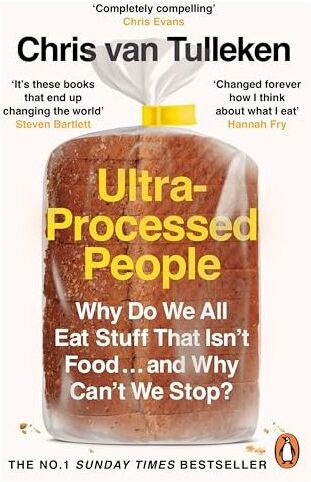
Penguin Ultra-Processed People: Why Do We All Eat Stuff That Isnt Food … and Why Cant We Stop?NOW WITH TWO BONUS CHAPTERS INCLUDING AN FAQTHE NUMBER ONE SUNDAY TIMES BESTSELLERFORTNUM & MASON'S DEBUT FOOD BOOK OF THE YEAR 2024A TIMES AND SUNDAY TIMES SCIENCE BOOK OF THE YEAR 2023AN ECONOMIST, DAILY MAIL, GOOD HOUSEKEEPING and AMAZON BEST BOOK OF THE YEAR 2023SHORTLISTED FOR WATERSTONE'S BOOK OF THE YEAR 2023Chosen by the SUNDAY TIMES, GUARDIAN, FT and DAILY MAIL as one of their BEST SUMMER BOOKS OF 2023'If you only read one diet or nutrition book in your life, make it this one' Bee Wilson'A devastating, witty and scholarly destruction of the shit food we eat and why' Adam Rutherford---An eye-opening investigation into the science, economics, history and production of ultra-processed food. It's not you, it's the food. We have entered a new 'age of eating' where most of our calories come from an entirely novel set of substances called Ultra-Processed Food, food which is industrially processed and designed and marketed to be addictive. But do we really know what it's doing to our bodies?Join Chris in his travels through the world of food science and a UPF diet to discover what's really going on. Find out why exercise and willpower can't save us, and what UPF is really doing to our bodies, our health, our weight, and the planet (hint: nothing good). For too long we've been told we just need to make different choices, when really we're living in a food environment that makes it nigh-on impossible. So this is a book about our rights. The right to know what we eat and what it does to our bodies and the right to good, affordable food. Number 1 Sunday Times bestseller, August 202310,95 £*Shipping: 2,99 £Secure redirect to the provider
-
Matthew Walker & Ada Calhoun Why We Sleep, Why We Can't Sleep - 2 Books Collection Set - Non Fiction - PaperbackTitles in This Set:. Why We Sleep The New Science of Sleep and Dreams. Why We Can't Sleep Women's New Midlife Crisis Condition: BRAND NEW. Format: Paperback Overview:. Two essential nonfiction titles that tackle two crucial aspects of wellbeing—sleep and midlife—this two-book collection pairs Matthew Walker's groundbreaking exploration of sleep with Ada Calhoun's candid examination of women's midlife experiences. Why We Sleep distills twenty years of neuroscience into practical guidance about REM sleep, circadian rhythms, caffeine and alcohol, and how our sleep patterns shift as we age. Walker unpacks why solid, consistent sleep protects memory, mood, and immune function, and why timing light exposure and routine can transform days and nights. Why We Can't Sleep offers a sharp, compassionate lens on the pressures shaping modern life for Generation X women, from escalating housing costs to HR trends, credit card debt, and the toll of divorce. This pairing invites readers to rethink daily habits while validating personal experiences, delivering both measurable science and human relevance. The set is a versatile, highly readable collection that makes a thoughtful gift for health-minded readers, new parents, busy professionals, or anyone curious about how sleep and midlife intersect with happiness, energy, and longevity. What Makes This Collection Special:. Linking brain science with real-world lived experience, this collection stands out in a crowded nonfiction aisle. Walker's clear, rigorous sleep science illuminates why sleep is the bedrock of learning, memory, metabolism, and mood, while Calhoun's investigative voice reveals how midlife pressures uniquely affect women today. The two titles complement each other: one explains how to improve the quality and duration of sleep; the other explains why so many women feel overwhelmed by economic and social forces. The reading journey is engaging, practical, and empowering, offering evidence-based strategies alongside relatable storytelling. It’s an ideal gift for graduates, new parents, professionals juggling deadlines, or anyone seeking both a healthier night’s rest and a clearer understanding of midlife challenges. The authors’ reputations and timely topics add collectable appeal for readers who value depth, usefulness, and inspiration. Books Included in This Collection:. Why We Sleep The New Science of Sleep and Dreams. In Why We Sleep, Walker guides readers through the science of sleep in an engaging, practical voice. The book explains how sleep stages—especially REM sleep—affect memory, learning, and health, and it shows how caffeine, alcohol, and light exposure disrupt our cycles. The paperback edition makes complex neuroscience accessible with clear explanations, memorable analogies, and actionable routines you can start tonight. Perfect for anyone who wants more restful nights, sharper mornings, and a deeper appreciation for this essential biological process. Why We Can't Sleep Women's New...15,99 £*Shipping: 2,99 £Secure redirect to the provider
-
Why do cats go crazy when we humans sing?
Cats may go crazy when humans sing because they are sensitive to high-pitched sounds, and singing often involves high-pitched tones. Additionally, cats may interpret singing as a form of communication or a territorial display, which can trigger their natural instincts. Some cats may also be reacting to the unfamiliar sound and trying to investigate or understand it. Overall, the specific reasons why cats react to human singing can vary from cat to cat, but it is likely a combination of their sensitivity to sound and their natural instincts. **
-
In the 10th grade, we sing music.
In the 10th grade, students typically participate in music classes where they learn to sing various genres of music. Singing in a group setting helps students develop their vocal skills, musicality, and teamwork. It also provides an opportunity for students to express themselves creatively and build confidence. Overall, singing music in the 10th grade can be a fun and enriching experience that enhances students' appreciation for music. **
-
Why do we sing in the song Oh Christmas Tree, how beautiful are your branches?
In the song "Oh Christmas Tree," we sing about the beauty of the tree's branches as a way to celebrate and appreciate the natural beauty of the Christmas tree. The song highlights the tree's role as a symbol of the holiday season and the joy it brings to people. By singing about the tree's beauty, we are expressing our admiration for this iconic symbol of Christmas and the festive spirit it represents. **
-
Why do blackbirds sing?
Blackbirds sing for a variety of reasons. One main reason is to establish and defend their territory. Male blackbirds will sing to let other males know that a particular area is already claimed. They also sing to attract a mate during the breeding season. Additionally, blackbirds may sing to communicate with other members of their flock, to warn of potential predators, or simply to express their emotions. Overall, singing is an important form of communication and social interaction for blackbirds. **
* All prices are inclusive of VAT and, if applicable, plus shipping costs. The offer information is based on the details provided by the respective shop and is updated through automated processes. Real-time updates do not occur, so deviations can occur in individual cases. ** Note: Parts of this content were created by AI.