Buy smartaging.eu ?
We are moving the project
smartaging.eu .
Are you interested in purchasing the domain
smartaging.eu ?
domain@kv-gmbh.de · 0541-91531010
Buy smartaging.eu ?
When is "arriver" and when is "venir" used?
"Arriver" is used to indicate the arrival of someone or something at a specific location, while "venir" is used to indicate the act of coming to a specific location. "Arriver" is often used to describe the arrival of a person or thing at a destination, while "venir" is used to describe the action of coming from one place to another. In general, "arriver" is used to describe the end point of a journey, while "venir" is used to describe the beginning of a journey. **
Why does venir become venues in the participe passé?
Venir becomes venues in the participe passé because it is an irregular verb in French. The past participle of venir is formed by adding -u for the singular masculine form, -ue for the singular feminine form, -us for the plural masculine form, and -ues for the plural feminine form. Therefore, the past participle of venir is venu for the singular masculine form, venue for the singular feminine form, venus for the plural masculine form, and venues for the plural feminine form. **


Similar search terms for Venir
Top-Angebote
Products related to Venir:
-
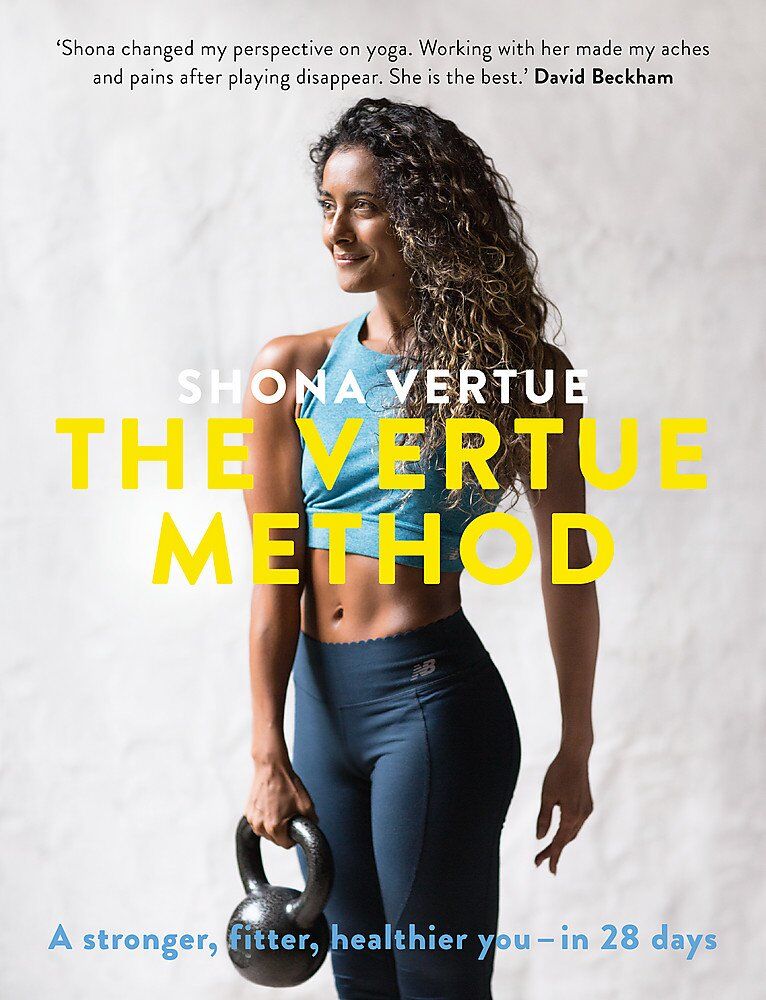
Yellow Kite The Vertue Method by Shona Vertue - Paperback - 28-Day Fitness, Yoga & Nutrition Plan - Health & Fitness BookGet fit and feel great with The Vertue Method, a 28-day plan from celebrity personal trainer and yoga teacher Shona Vertue. This practical system combines resistance training, yoga, and mindful eating to help you build strength, flexibility, and calm in body and mind. The book is designed for anyone who has tried fitness fads without lasting results, offering a realistic and sustainable route to a healthier you. Shona Vertue's expertise is distilled into a clear, structured 28-day plan that can be followed at home or in the gym. The book's signature 'three-in-one' approach combines weighted resistance training to build lean muscle and boost metabolism, yoga sequences to improve flexibility and lengthen tight muscles, and mindful eating to promote a balanced diet. With The Vertue Method, you can achieve a stronger, fitter, and healthier you in just 28 days.13,99 £*Shipping: 2,99 £Secure redirect to the provider
-
Uplift Curations Tarde Porque No Queria Venir Cartoon Enamel Pin Funny Spanish Cat Brooch For Lapel, Backpack, Badge Jewelry Gift design eShow off your playful personality with this quirky cartoon enamel pin, featuring a humorous Tarde Porque No Queria Venir Spanish cat design thats sure to spark laughs. Perfect for cat lovers and fans of funny accessories, this funny lapel badge adds...40,00 $*Shipping: 0,00 $Secure redirect to the provider
-
Inspire Select 2025 Health Smart Watch AMOLED Bluetooth Call Fitness Tracker With ECG & Wellness Monitoring blackStay connected while monitoring your daily wellness with this advanced health smart watch designed for fitness, lifestyle tracking, and smart convenience. Featuring a stunning AMOLED smartwatch display, Bluetooth calling, ECG monitoring, and...288,98 $*Shipping: 0,00 $Secure redirect to the provider
-
Uplift Curations Tarde Porque No Queria Venir Cartoon Enamel Pin Funny Spanish Cat Brooch For Lapel, Backpack, Badge Jewelry Gift design bShow off your playful personality with this quirky cartoon enamel pin, featuring a humorous Tarde Porque No Queria Venir Spanish cat design thats sure to spark laughs. Perfect for cat lovers and fans of funny accessories, this funny lapel badge adds...40,00 $*Shipping: 0,00 $Secure redirect to the provider



-
What is the difference in the use of ir and venir?
The main difference between the use of "ir" and "venir" in Spanish is that "ir" is used to indicate movement towards a location, while "venir" is used to indicate movement towards the speaker's location. For example, "voy al parque" means "I am going to the park," indicating movement away from the speaker, while "vienes a mi casa" means "you are coming to my house," indicating movement towards the speaker. Additionally, "ir" is an irregular verb and its conjugation changes depending on the subject, while "venir" is a regular -ir verb and follows a more predictable conjugation pattern. **
-
How do you form "venir de faire" and "être en train de faire"?
"Venir de faire" is formed by conjugating the verb "venir" in the present tense followed by the preposition "de" and the infinitive of the verb you want to express has just been done. For example, "Je viens de manger" means "I have just eaten." "Être en train de faire" is formed by conjugating the verb "être" in the present tense followed by the preposition "en train de" and the infinitive of the verb you want to express is currently being done. For example, "Je suis en train de manger" means "I am currently eating." **
-
What is the difference between "être en train" and "venir de faire" in English?
"Être en train" is used to express that someone is in the process of doing something, while "venir de faire" is used to indicate that someone has just finished doing something. For example, "Je suis en train de manger" means "I am in the process of eating," while "Je viens de manger" means "I have just eaten." Both expressions are used to talk about actions in progress or recently completed, but they convey different time frames. **
-
What are the exceptions for using the subjunctive with the verbs venir, boire, and prendre?
The verbs venir, boire, and prendre do not typically trigger the use of the subjunctive mood in French. However, they can be followed by the subjunctive in certain situations, such as when expressing doubt, uncertainty, or desire. In these cases, the subjunctive is used to convey a sense of subjectivity or unreality in the sentence. **


What are the conjugations for the Spanish verbs ir (to go) and venir (to come)?
The conjugations for the Spanish verb "ir" (to go) are: - Yo voy (I go) - Tú vas (you go) - Él/ella/usted va (he/she/you go) - Nosotros/nosotras vamos (we go) - Vosotros/vosotras vais (you all go) - Ellos/ellas/ustedes van (they/you all go) The conjugations for the Spanish verb "venir" (to come) are: - Yo vengo (I come) - Tú vienes (you come) - Él/ella/usted viene (he/she/you come) - Nosotros/nosotras venimos (we come) - Vosotros/vosotras venís (you all come) - Ellos/ellas/ustedes vienen (they/you all come) **
Which fitness lifestyle would you follow?
I would follow a balanced fitness lifestyle that includes a mix of cardiovascular exercise, strength training, flexibility work, and rest. I believe in the importance of variety to keep things interesting and to work different muscle groups. Additionally, I would focus on setting realistic goals, listening to my body, and making sustainable changes to my diet and exercise routine. Overall, I believe in a holistic approach to fitness that prioritizes both physical and mental well-being. **
Top-Angebote
Products related to Venir:
-
Harper ltd Max Lugavere 2 Book Set – Genius Foods & The Genius Life Brain Health, Nutrition & Wellness CollectionMax Lugavere 2-Book Collection Set (The Genius Life & Genius Foods – Nutrition, Health, Wellness, Diet, Brain & Body Health, Self-Help & Fitness) The Genius Life: Heal Your Mind, Strengthen Your Body, and Become Extraordinary: Supporting the work of Battersea Dogs and Cats Home.Enjoy a heartwarming dog to brighten every single day of the year. From Pickles, the dog who single-handedly saved the 1966 world cup, to Pal, who found silver screen fame as the original Lassie, Battersea's A Dog a Day contains 365 fascinating stories of dogs to enjoy throughout the year.Beautifully packaged and illustrated throughout with charming illustrations of cheeky puppies and hounds, this is the perfect book for any lover of our four-legged friends. Genius Foods: Become Smarter, Happier, and More Productive While Protecting Your Brain for Life: After his mother was diagnosed with a mysterious form of dementia, Max Lugavere put his successful media career on hold to learn everything he could about brain health and performance. For the better half of a decade, he consumed the most up-to-date scientific research, talked to dozens of leading scientists and clinicians around the world, and visited the country’s best neurology departments—all in the hopes of understanding his mother’s condition.Now, in Genius Foods, Lugavere presents a comprehensive guide to brain optimization. He uncovers the stunning link between our dietary and lifestyle choices and our brain functions, revealing how the foods you eat directly affect your ability to focus, learn, remember, create, analyze new ideas, and maintain a balanced mood.12,95 £*Shipping: 2,99 £Secure redirect to the provider
-
Penguin Life Eat Yourself Healthy by Dr Megan Rossi - Gut Health & Nutrition Guide - Paperback - IBS, Bloating & Digestive Wellness RecipesDiscover the simple guide to a healthier you with Eat Yourself Healthy by Dr Megan Rossi. This accessible book explains how the trillions of microbes in your digestive system influence your energy levels, skin, mood, and immunity. Whether you're battling bloating, IBS, or just want to feel better from the inside out, Dr Rossi's practical advice and delicious gut-boosting recipes will help you take control of your gut health. Drawing on her decade of clinical experience and the latest scientific research, Dr Rossi demystifies the gut microbiome and shows you how to nurture it for long-term wellbeing. This book covers common digestive complaints such as IBS, bloating, and food intolerance, providing you with the knowledge and tools to make informed choices about your diet and lifestyle. Written by Dr Megan Rossi, a leading expert in gut health, Eat Yourself Healthy is a must-read for anyone looking to improve their overall health and wellbeing.14,99 £*Shipping: 2,99 £Secure redirect to the provider
-
Yellow Kite The Vertue Method by Shona Vertue - Paperback - 28-Day Fitness, Yoga & Nutrition Plan - Health & Fitness BookGet fit and feel great with The Vertue Method, a 28-day plan from celebrity personal trainer and yoga teacher Shona Vertue. This practical system combines resistance training, yoga, and mindful eating to help you build strength, flexibility, and calm in body and mind. The book is designed for anyone who has tried fitness fads without lasting results, offering a realistic and sustainable route to a healthier you. Shona Vertue's expertise is distilled into a clear, structured 28-day plan that can be followed at home or in the gym. The book's signature 'three-in-one' approach combines weighted resistance training to build lean muscle and boost metabolism, yoga sequences to improve flexibility and lengthen tight muscles, and mindful eating to promote a balanced diet. With The Vertue Method, you can achieve a stronger, fitter, and healthier you in just 28 days.13,99 £*Shipping: 2,99 £Secure redirect to the provider
-
Uplift Curations Tarde Porque No Queria Venir Cartoon Enamel Pin Funny Spanish Cat Brooch For Lapel, Backpack, Badge Jewelry Gift design eShow off your playful personality with this quirky cartoon enamel pin, featuring a humorous Tarde Porque No Queria Venir Spanish cat design thats sure to spark laughs. Perfect for cat lovers and fans of funny accessories, this funny lapel badge adds...40,00 $*Shipping: 0,00 $Secure redirect to the provider
-
When is "arriver" and when is "venir" used?
"Arriver" is used to indicate the arrival of someone or something at a specific location, while "venir" is used to indicate the act of coming to a specific location. "Arriver" is often used to describe the arrival of a person or thing at a destination, while "venir" is used to describe the action of coming from one place to another. In general, "arriver" is used to describe the end point of a journey, while "venir" is used to describe the beginning of a journey. **
-
Why does venir become venues in the participe passé?
Venir becomes venues in the participe passé because it is an irregular verb in French. The past participle of venir is formed by adding -u for the singular masculine form, -ue for the singular feminine form, -us for the plural masculine form, and -ues for the plural feminine form. Therefore, the past participle of venir is venu for the singular masculine form, venue for the singular feminine form, venus for the plural masculine form, and venues for the plural feminine form. **
-
What is the difference in the use of ir and venir?
The main difference between the use of "ir" and "venir" in Spanish is that "ir" is used to indicate movement towards a location, while "venir" is used to indicate movement towards the speaker's location. For example, "voy al parque" means "I am going to the park," indicating movement away from the speaker, while "vienes a mi casa" means "you are coming to my house," indicating movement towards the speaker. Additionally, "ir" is an irregular verb and its conjugation changes depending on the subject, while "venir" is a regular -ir verb and follows a more predictable conjugation pattern. **
-
How do you form "venir de faire" and "être en train de faire"?
"Venir de faire" is formed by conjugating the verb "venir" in the present tense followed by the preposition "de" and the infinitive of the verb you want to express has just been done. For example, "Je viens de manger" means "I have just eaten." "Être en train de faire" is formed by conjugating the verb "être" in the present tense followed by the preposition "en train de" and the infinitive of the verb you want to express is currently being done. For example, "Je suis en train de manger" means "I am currently eating." **
Similar search terms for Venir
-
Inspire Select 2025 Health Smart Watch AMOLED Bluetooth Call Fitness Tracker With ECG & Wellness Monitoring blackStay connected while monitoring your daily wellness with this advanced health smart watch designed for fitness, lifestyle tracking, and smart convenience. Featuring a stunning AMOLED smartwatch display, Bluetooth calling, ECG monitoring, and...288,98 $*Shipping: 0,00 $Secure redirect to the provider
-
Uplift Curations Tarde Porque No Queria Venir Cartoon Enamel Pin Funny Spanish Cat Brooch For Lapel, Backpack, Badge Jewelry Gift design bShow off your playful personality with this quirky cartoon enamel pin, featuring a humorous Tarde Porque No Queria Venir Spanish cat design thats sure to spark laughs. Perfect for cat lovers and fans of funny accessories, this funny lapel badge adds...40,00 $*Shipping: 0,00 $Secure redirect to the provider
-
Uplift Curations Tarde Porque No Queria Venir Cartoon Enamel Pin Funny Spanish Cat Brooch For Lapel, Backpack, Badge Jewelry Gift design cShow off your playful personality with this quirky cartoon enamel pin, featuring a humorous Tarde Porque No Queria Venir Spanish cat design thats sure to spark laughs. Perfect for cat lovers and fans of funny accessories, this funny lapel badge adds...40,00 $*Shipping: 0,00 $Secure redirect to the provider
-
Uplift Curations Tarde Porque No Queria Venir Cartoon Enamel Pin Funny Spanish Cat Brooch For Lapel, Backpack, Badge Jewelry Gift design dShow off your playful personality with this quirky cartoon enamel pin, featuring a humorous Tarde Porque No Queria Venir Spanish cat design thats sure to spark laughs. Perfect for cat lovers and fans of funny accessories, this funny lapel badge adds...40,00 $*Shipping: 0,00 $Secure redirect to the provider
-
What is the difference between "être en train" and "venir de faire" in English?
"Être en train" is used to express that someone is in the process of doing something, while "venir de faire" is used to indicate that someone has just finished doing something. For example, "Je suis en train de manger" means "I am in the process of eating," while "Je viens de manger" means "I have just eaten." Both expressions are used to talk about actions in progress or recently completed, but they convey different time frames. **
-
What are the exceptions for using the subjunctive with the verbs venir, boire, and prendre?
The verbs venir, boire, and prendre do not typically trigger the use of the subjunctive mood in French. However, they can be followed by the subjunctive in certain situations, such as when expressing doubt, uncertainty, or desire. In these cases, the subjunctive is used to convey a sense of subjectivity or unreality in the sentence. **
-
What are the conjugations for the Spanish verbs ir (to go) and venir (to come)?
The conjugations for the Spanish verb "ir" (to go) are: - Yo voy (I go) - Tú vas (you go) - Él/ella/usted va (he/she/you go) - Nosotros/nosotras vamos (we go) - Vosotros/vosotras vais (you all go) - Ellos/ellas/ustedes van (they/you all go) The conjugations for the Spanish verb "venir" (to come) are: - Yo vengo (I come) - Tú vienes (you come) - Él/ella/usted viene (he/she/you come) - Nosotros/nosotras venimos (we come) - Vosotros/vosotras venís (you all come) - Ellos/ellas/ustedes vienen (they/you all come) **
-
Which fitness lifestyle would you follow?
I would follow a balanced fitness lifestyle that includes a mix of cardiovascular exercise, strength training, flexibility work, and rest. I believe in the importance of variety to keep things interesting and to work different muscle groups. Additionally, I would focus on setting realistic goals, listening to my body, and making sustainable changes to my diet and exercise routine. Overall, I believe in a holistic approach to fitness that prioritizes both physical and mental well-being. **
* All prices are inclusive of VAT and, if applicable, plus shipping costs. The offer information is based on the details provided by the respective shop and is updated through automated processes. Real-time updates do not occur, so deviations can occur in individual cases. ** Note: Parts of this content were created by AI.